
The first job at the quarry was to drill a hole for the explosives. This was a two-man job; with one person holding the rammer bar, which was kept lubricated with water, and the other hitting this with a large hammer. After they had made the hole, explosives were placed inside. In later years the explosives were stored in a rock cut compartment in the Welsh side of the quarry. The drill marks are still visible in the rock today.
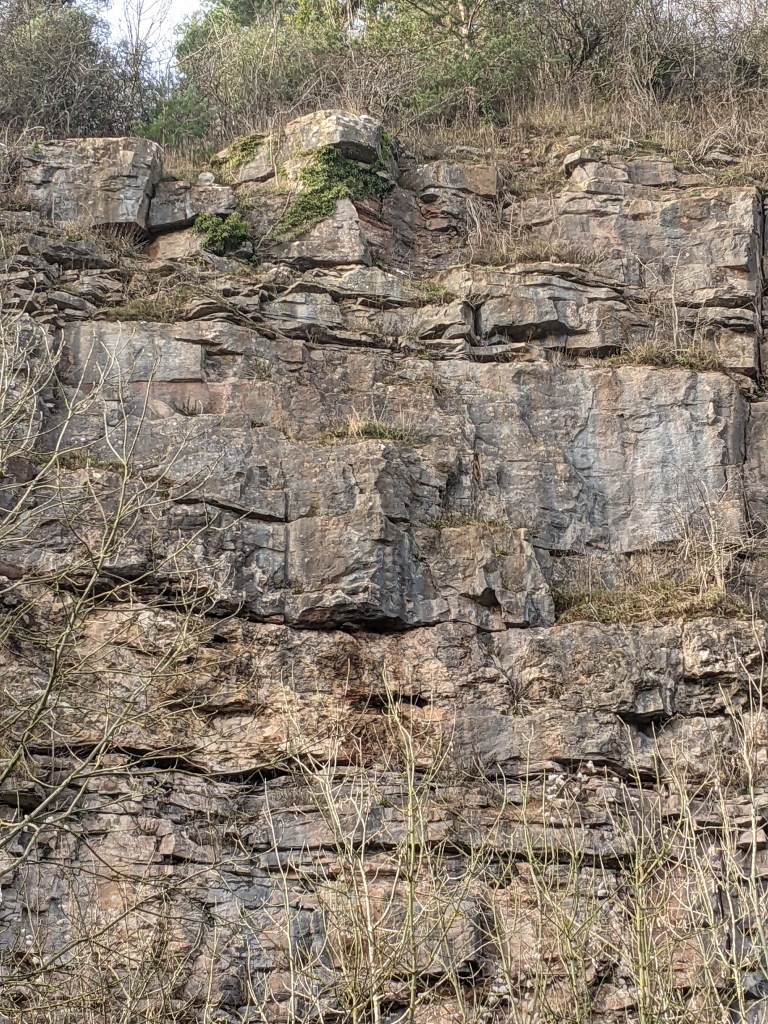
(Drill lines for the explosives still visible in the cliff)
After this the stone breakers would breakdown the stone into manageable pieces at the quarry face, with sledgehammers, wedges and bars. They were paid on piece rate.
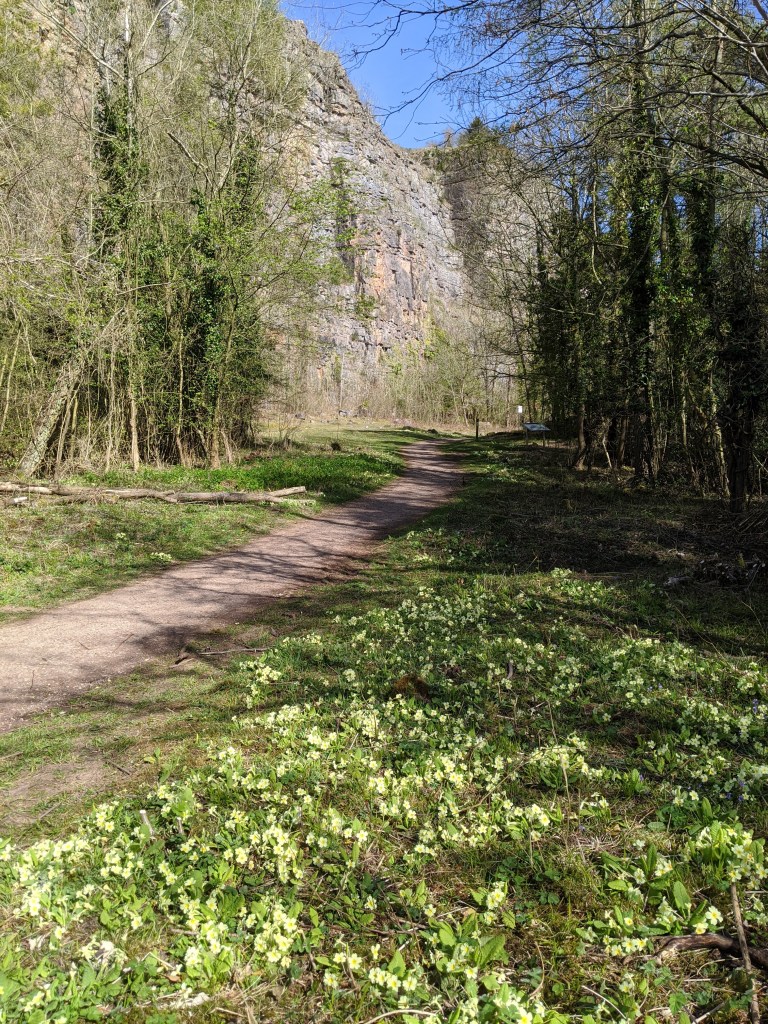
(Llanymynech Quarry 2021)
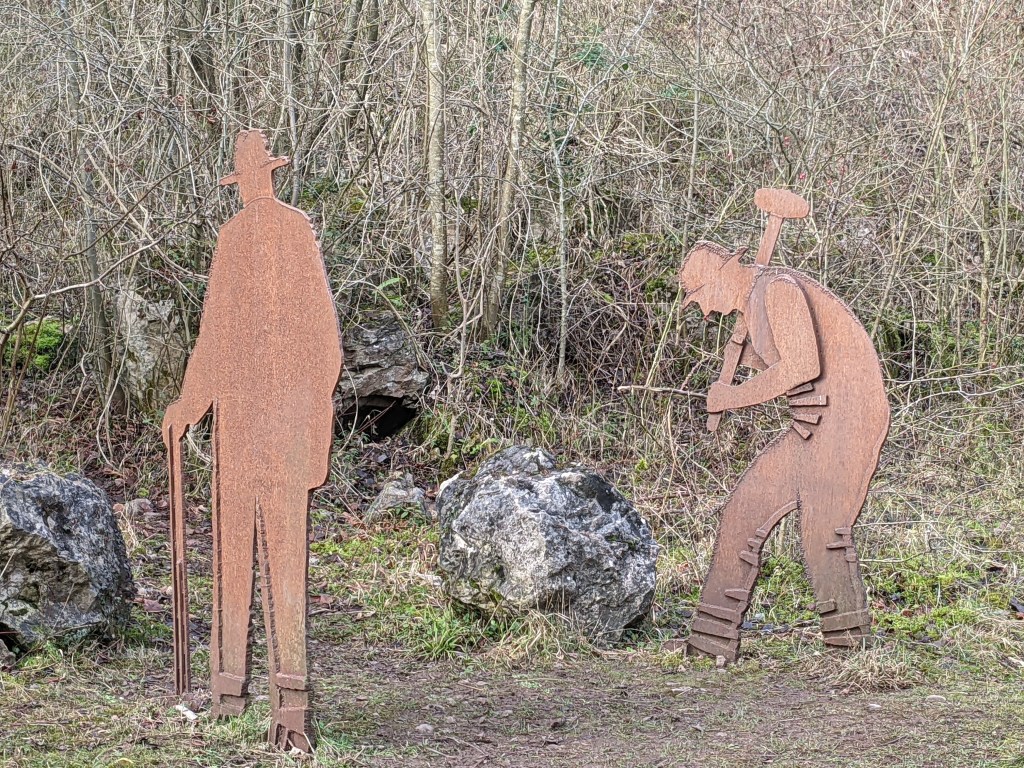
(Stone Breakers below the cliff face January 2022)
The stone breakers would then put the stone into large wooden carts and push them along, or have them pulled by a horse, to the top of the inclined plane.
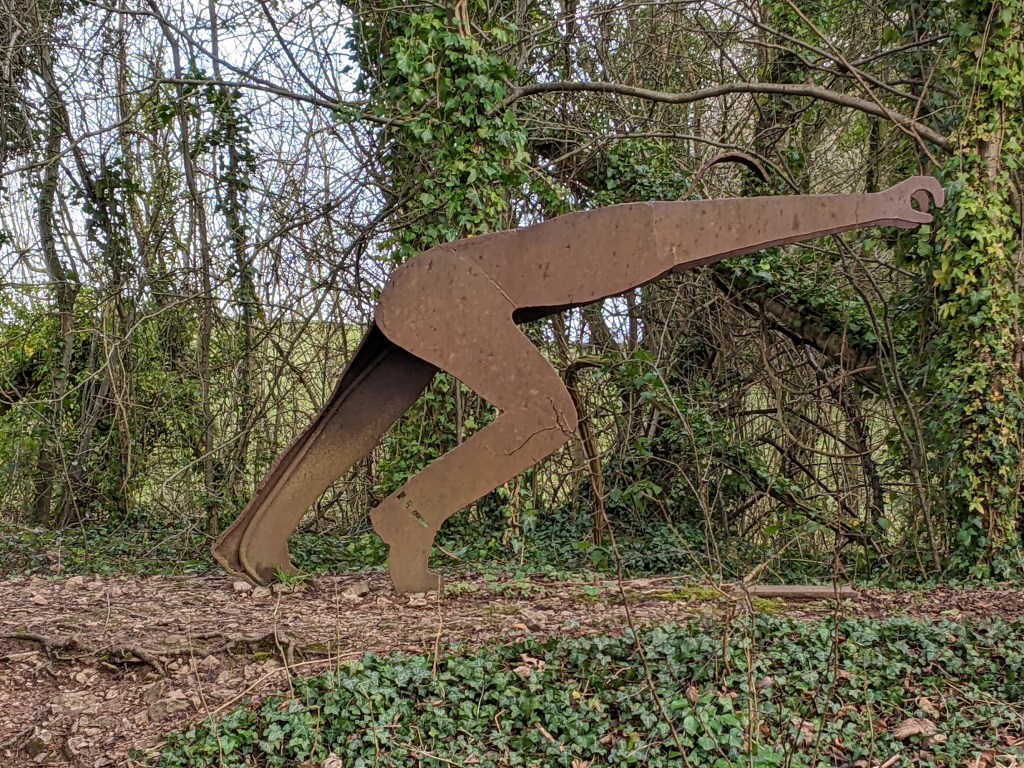
(Sculpture at Llanymynech Heritage Area 2022)
The brake boy was responsible for making sure the trucks on the inclined plane were hitched together properly and for using the brake when needed, to stop the trucks from careering out of control.
The Gin Wheel would lower the filled tucks down the hill and in turn the weight of these trucks would pull the empty trucks back up.
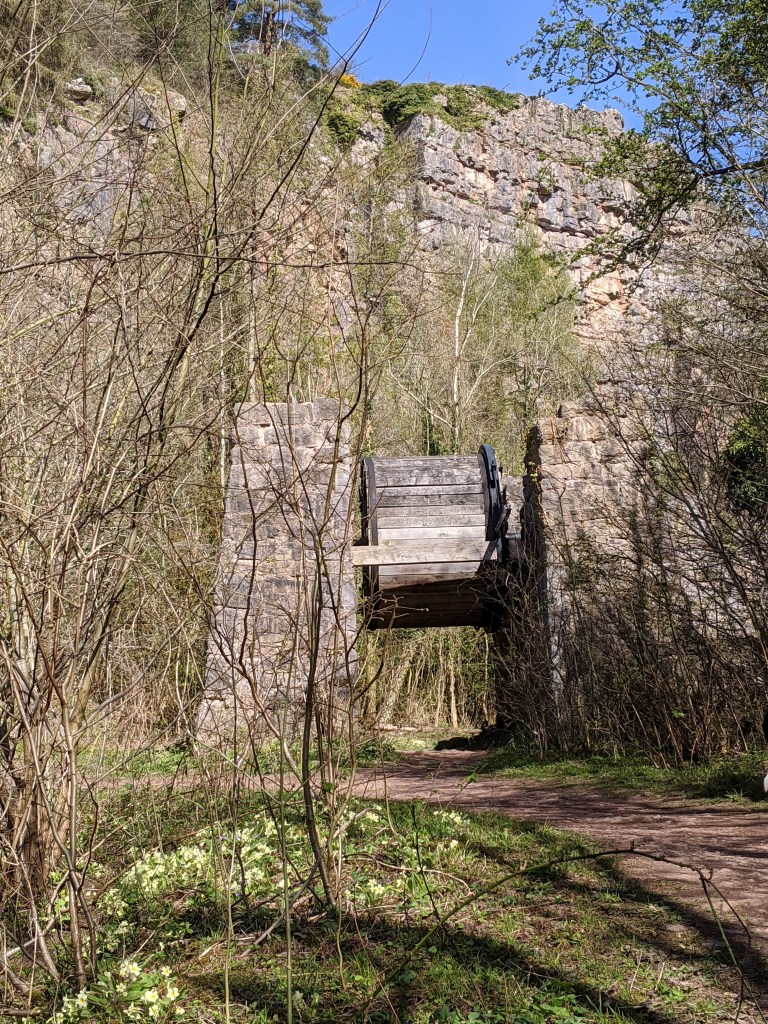
(Gin Wheel Llanymynech Quarry 2021)
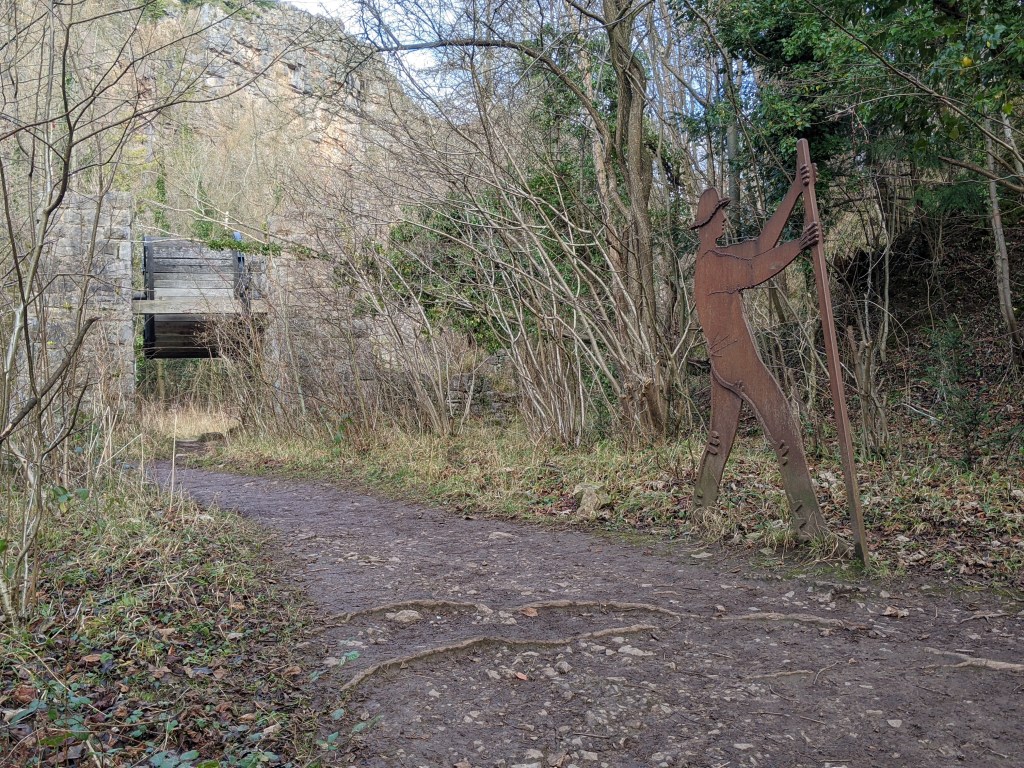
(Brake Man for Gin Wheel January 2022)
At the top of the quarry there was a blacksmith who looked after the horses’ feet and repaired and sharpened the quarrymen’s tools. There was also a horseman who looked after the horses who were stabled down near the kiln.
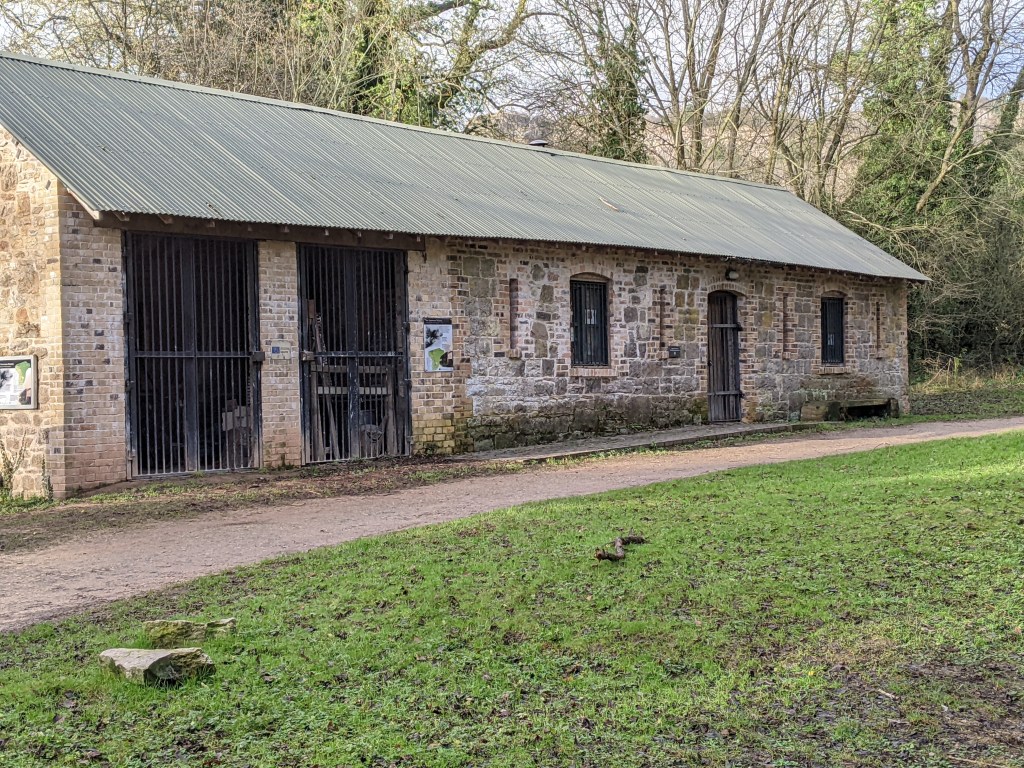
(Stables Llanymynech Heritage Area 2022)
Once the lime truck reached the base of the incline plane it was taken past the tally house. Here the trucks were weighed, and a record kept of tallys which were attached to the trucks and assigned to each worker. The lime was then either taken to the wharf to be either loaded onto the canal boats or to the kilns to be burnt.
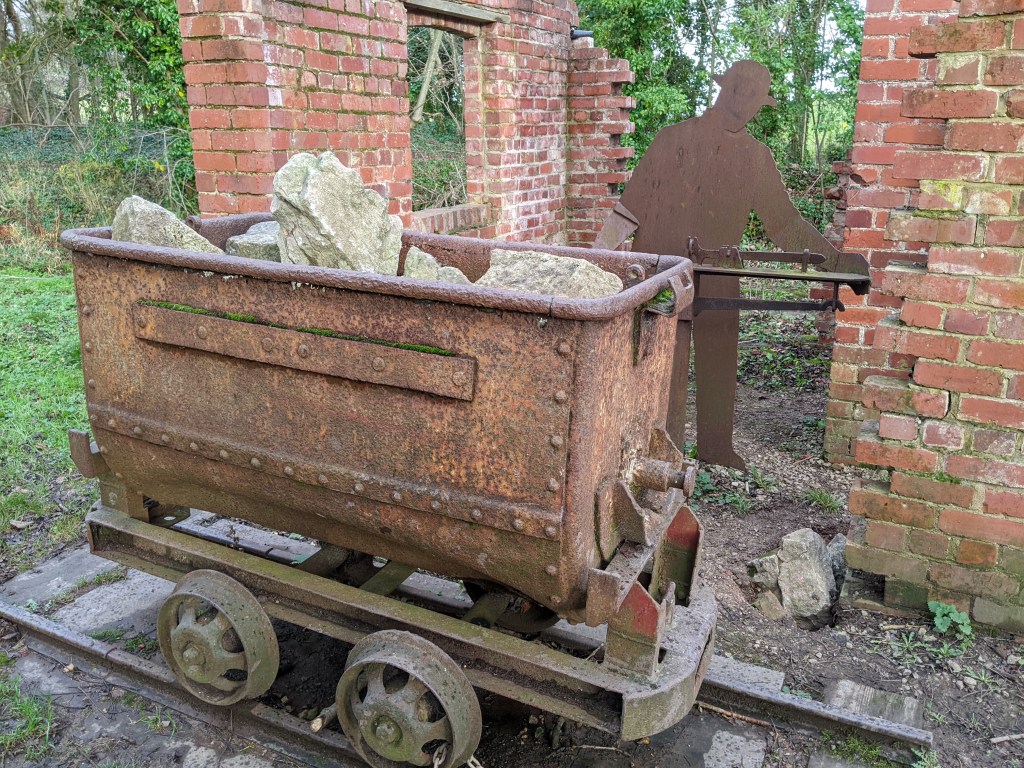
(Tally House Llanymynech Heritage Area 2021)

(Stone in cart on the way to the wharf, Llanymynech Heritage Area 2022)
At the kiln the stone packers received the stone and using the small turntables took the stone truck inside the kiln into one of the bays.
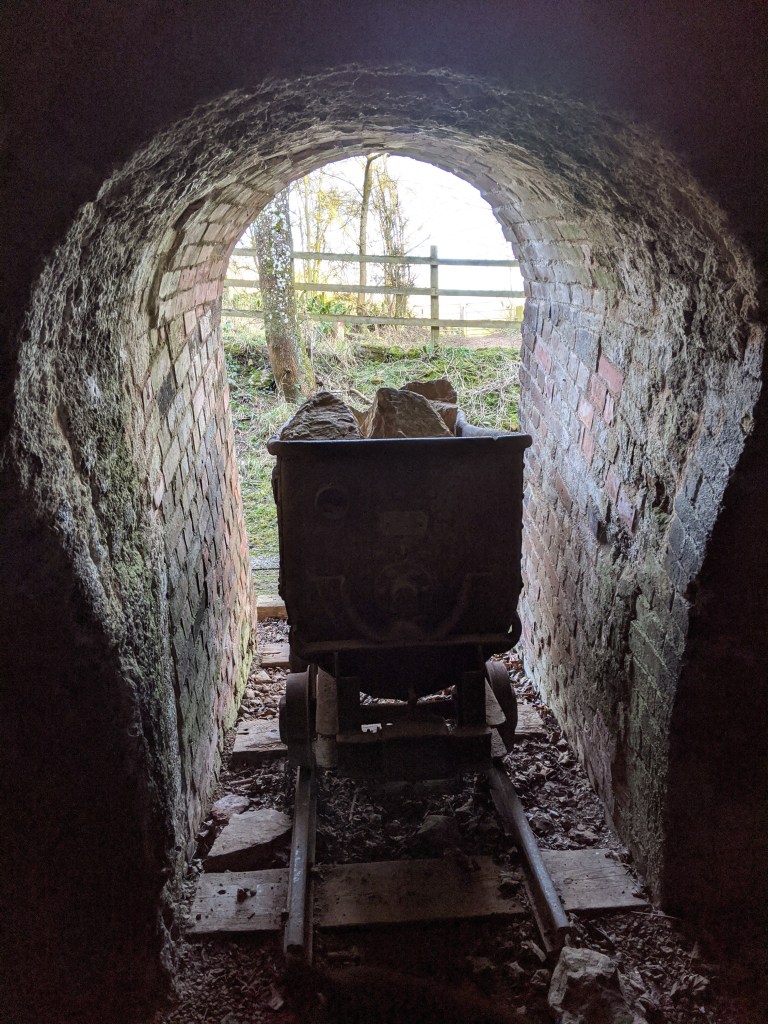
(Inside one of the access tunnels of the Hoffman Kiln, Llanymynech Heritage area 2021)
A steel rod was placed through the coal holes on top of the kiln and the packers would build a wall of stone 6 inches away from this rod and leaving ‘sough holes’ for the fire to pass through. When this was complete, they would remove the metal rods and a metal sheet which separated this bay from the fired bay.
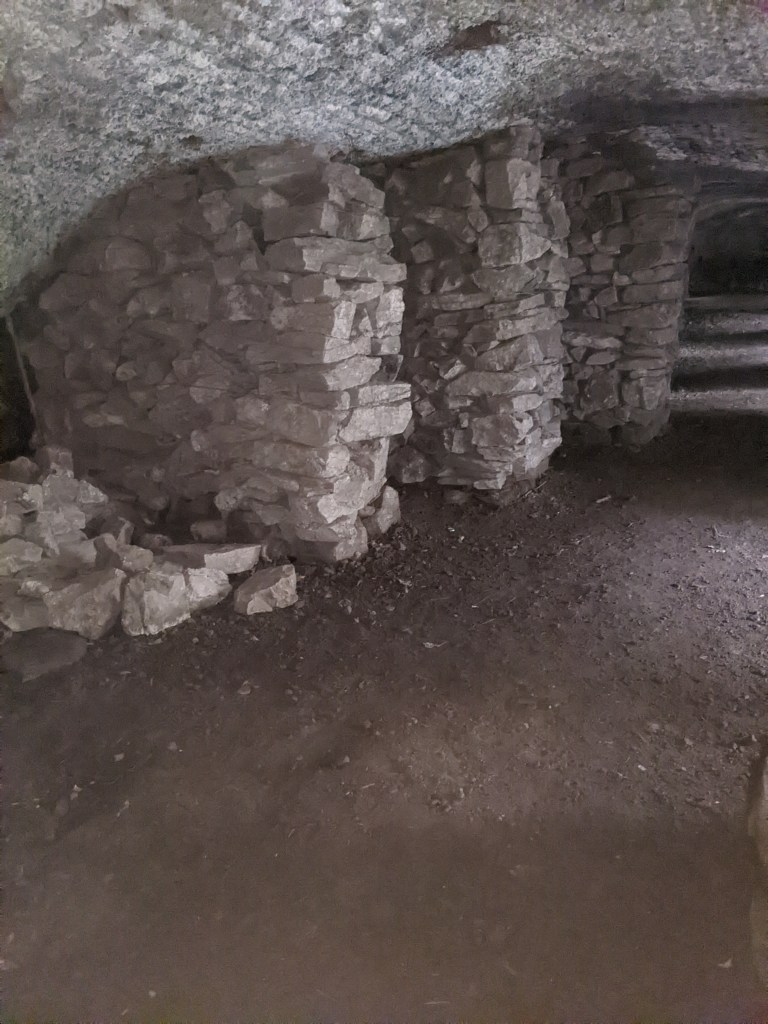
(Stone packed Inside the Hoffman Kiln, Llanymynech Heritage Area 2022)
Small pieces of coal, the size of a walnuts, would then be dropped through the holes in the roof. The fire could then spread through into the new bay from the fired bay.
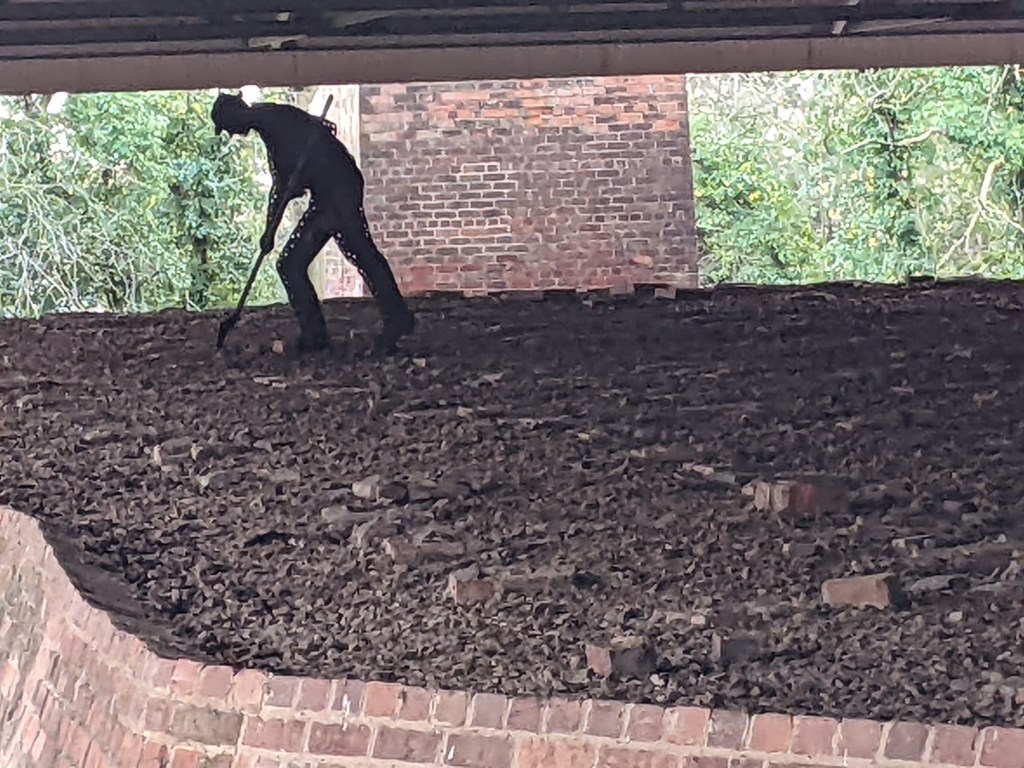
(Sculpture of coal being shovelled into the kiln, Llanymynech Heritage Area)
Elsewhere in the kiln the lime workers would be shovelling out the cooled, calcinated lime and placing this in trucks to be sent either to the canal or the railway siding.
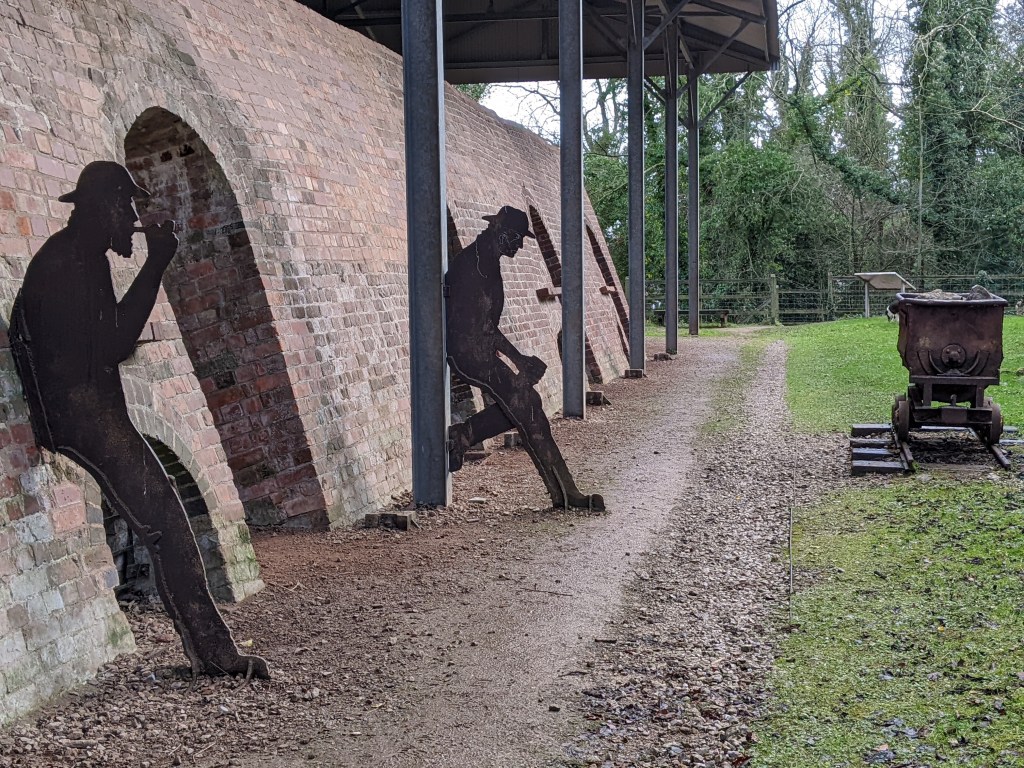
(Sculptures of kiln men resting outside the Hoffman Kiln, Llanymynech Heritage Area 2022)
Prior to the arrival of the railway in 1866 it was very dangerous to transport the burnt lime by canal, and although this did take place the production of lime increased considerably when the railway arrived.
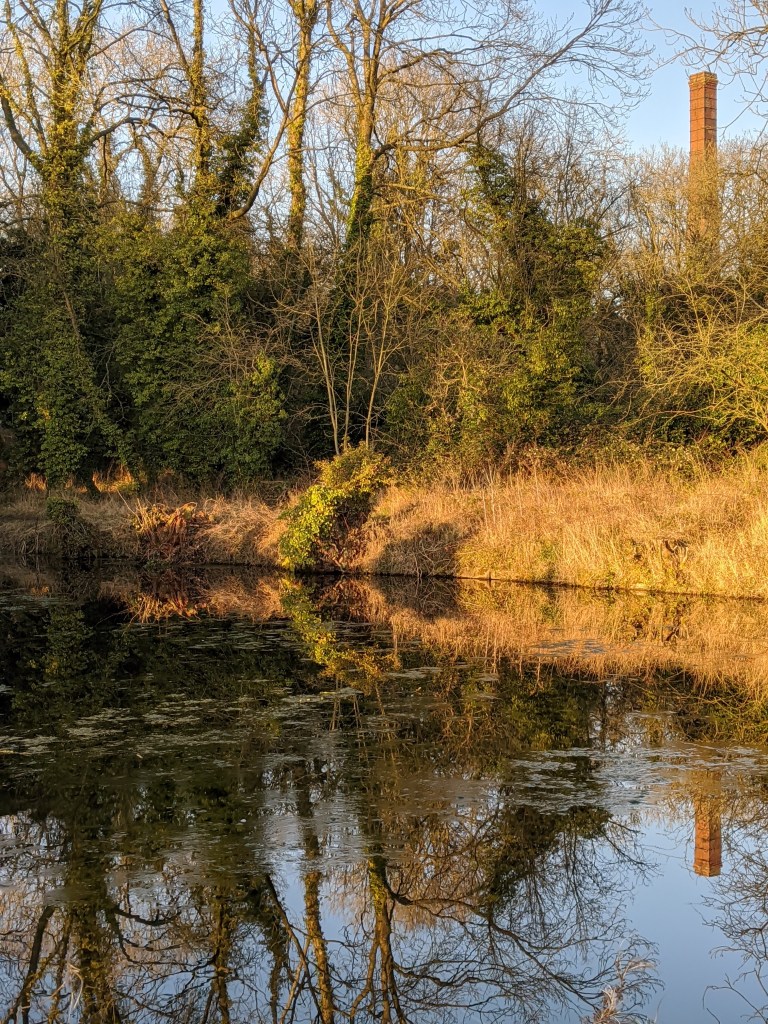
(Wharf at Llanymynech Heritage Area 2021)
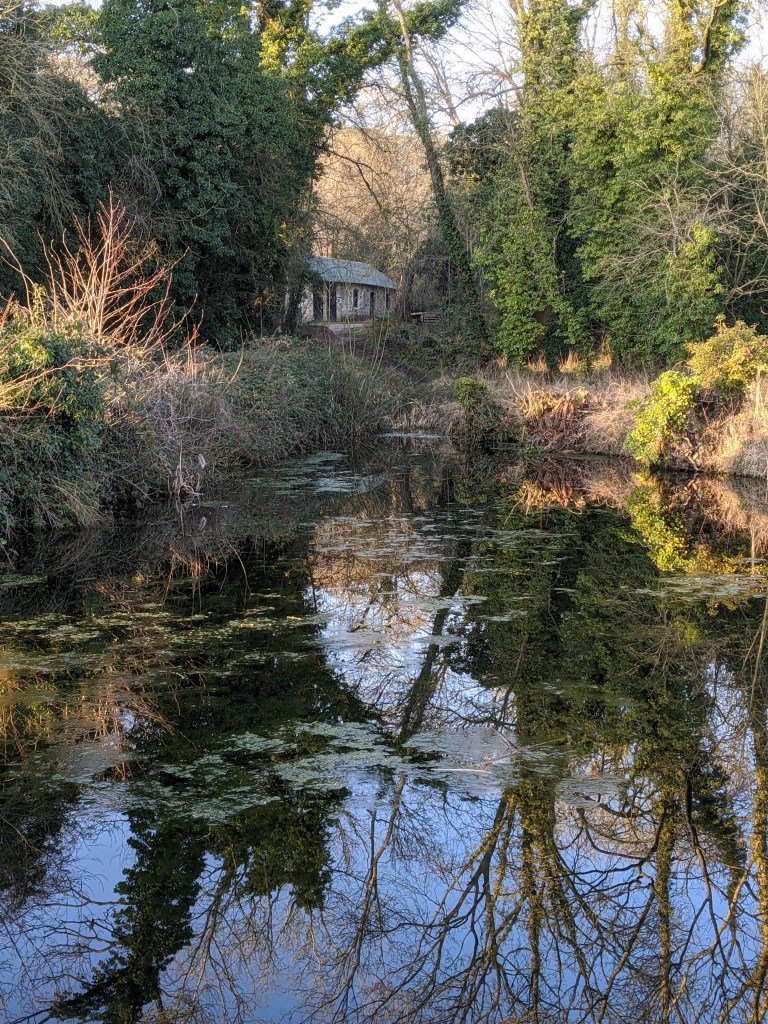
(Montgomery Canal Llanymynech Heritage Area 2021)
References:
HER. (2022, Jan 3). Heritage Gateway. Retrieved from Shropshire HER: https://www.heritagegateway.org.uk/Gateway/Results_Single.aspx?uid=MSA3273&resourceID=1015
Johnson, D. (2018). Lime Kilns History and Heritage. Stroud: Amberley Publishing.
Kelleher.S.MA. (2011). Archaological Desk Based Assessment of Land at Llanymynech. Ironbridge Archaology: Ironbridge Gorge Museum Trust.
R.Williams. (1989). Limekilns and Limeburning. Oxford: Shire.
Tinder, B. (2016). The Industrial Archaoeology of Shropshire. 2nd Ed. Logaston Press.
Williams, G. (Revised 1997). Much Wenlock’s Limestone Quarries. Much Wenlock: Ellingham Press.
#industrialarchaeology
#history
#genealogy
#familyhistory
#llanymynech
#shropshire
If you would like to follow my blog as I explore family history and local history subscribe on the link below.
 Hidden Histories Genealogy