
As demand for lime grew and canals were built the opportunities to commercially quarry and burn limestone emerged. To meet this growing demand kiln technology developed.
Early industrial limestone kilns are known as ‘pot’ kilns. These kilns were usually placed close to the limestone quarry face to enable the stone to be fed into the top of the kiln, others had a ramp to get the limestone to the top. A fire starter was placed in the kiln followed by alternate layers of limestone and fuel, either coal or coke. The fire would then burn for between 8 and 14 days until the lime had calcinated. The burnt lime was then withdrawn from the base of the kiln through the draw hole. The shape of these kilns and the method of firing led to an inconsistent burn with some parts over-burnt at the base and some under-burnt at the top. They also required the kiln to be freshly filled and fired each time.
An improvement on the ‘pot kiln’ form was the ‘running kiln ‘or ‘draw kiln’ developed from the middle of the Eighteenth Century. These were designed so that the coal and limestone could be added continuously through the top of the kiln and the calcinated lime removed from the base. This allowed the kiln to be in constant production.
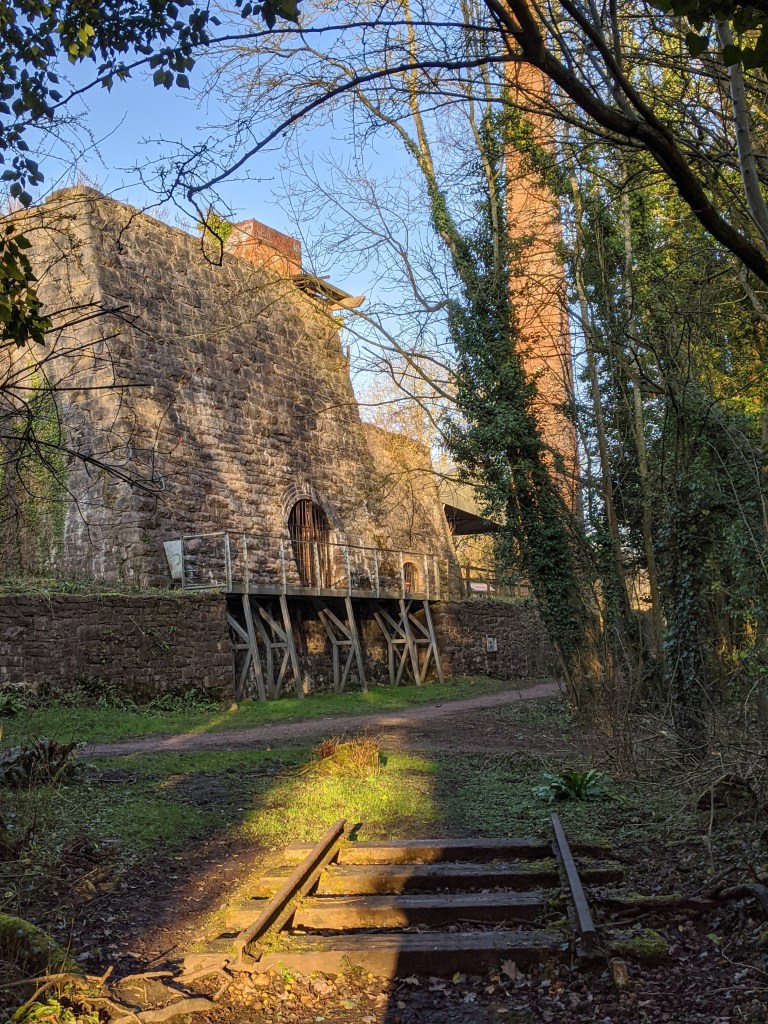
(Llanymynech Draw Kiln 2022)
Batteries of kilns were built either close to the quarry or close to a canal, which would provide the transport for the finished product. The 6-kiln battery at Pant, beside the Montgomery Canal, produced lime from the limestone brought to it by an inclined plane from the Llanymynech Quarry.
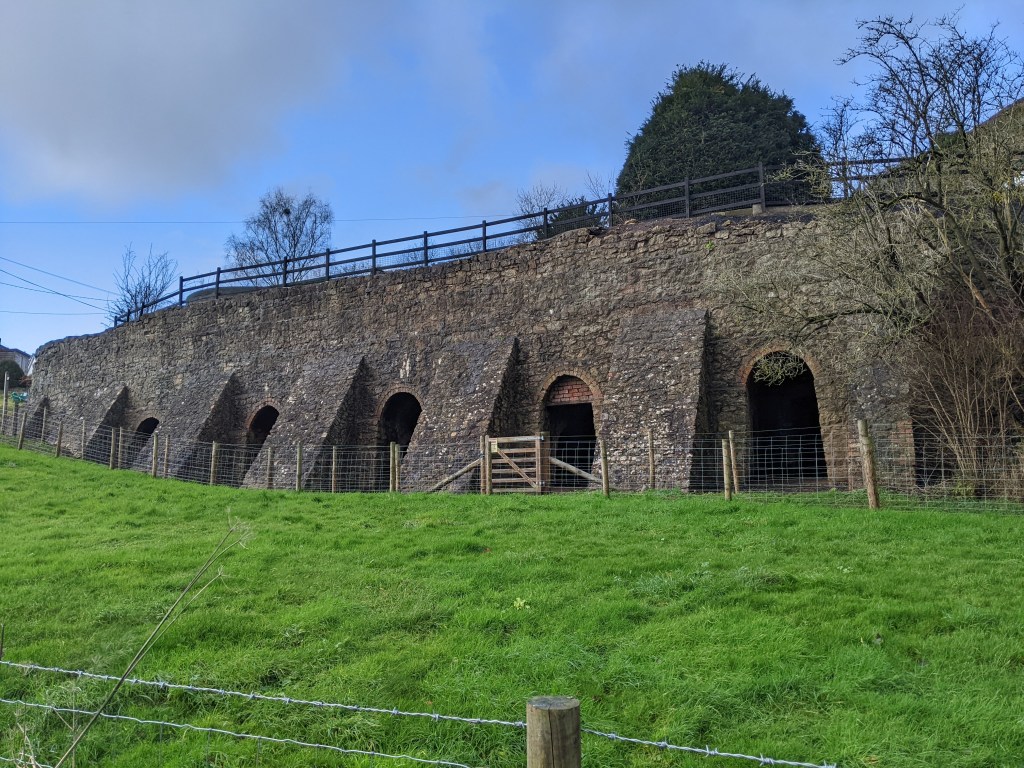
(Pant Lime Kiln Battery 2021)
Many different forms of lime kilns were invented to increase quality and productivity. Most were variations on vertical mixed feed kilns. However, Fredrich Hoffman from Germany, and Albert Licht from Poland, came up with the idea of horizontal continuous kilns, these became known as Hoffman Kilns. The original patent was for a circular kiln made up of firing chambers around a central chimney. One chamber would be burning, the next prepacked with limestone would be being preheated. A moveable metal sheet would contain this heat whilst the next bay was being loaded. Further around the kiln some bays would be cooling whilst others were cooled and the burnt lime ready for removal. Hoffman and Licht went on to design a sub-rectangular kiln. Their kilns were fuel efficient, but the layout of their flues did not distribute the heat evenly. Various people tried to improve on the Hoffman kiln. One such person was George Warren and it his design that was used when building the ‘Hoffman’ Kiln at Llanymynech.
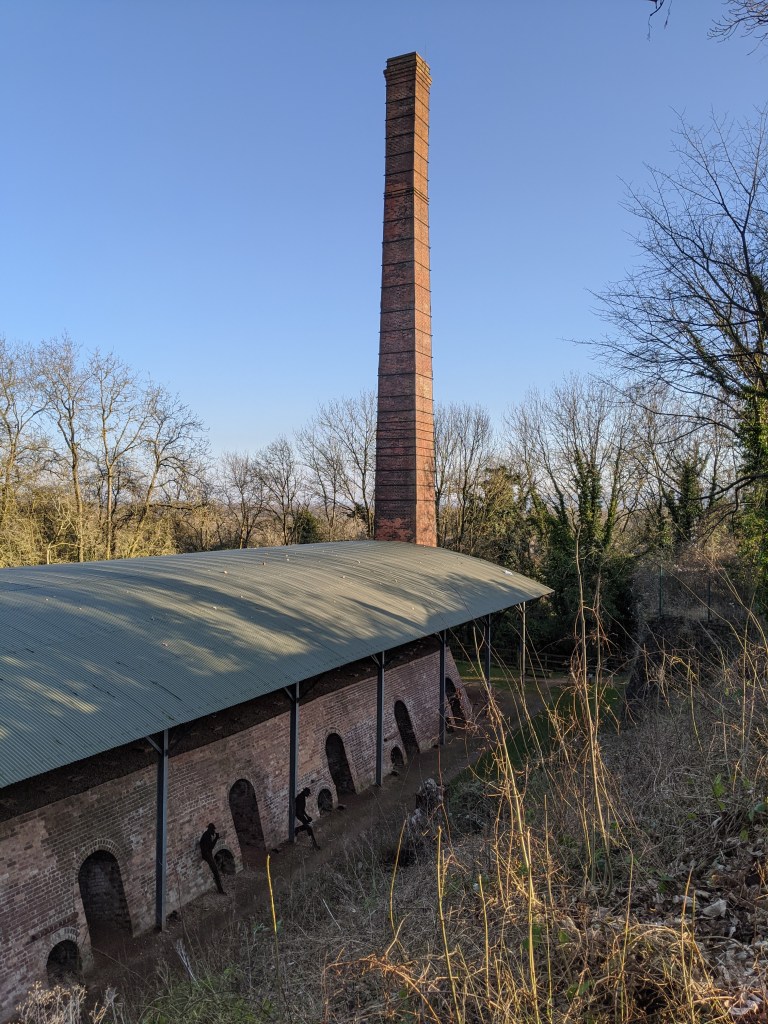
(Llanymynech Hoffman Kiln 2021)
To provide purer lime intermittent flare kilns were built. Here limestone was used to first create an arching vault. Above this vault limestone was added. Below the vault the fuel was burnt so the two were not intermixed and avoided contamination, especially when the calcinated lime was removed through the top opening. The draw hole was partially blocked with earth and stone to reduce the draught once the fire was alight. These kilns have a ledge towards the base where the first row of limestone was placed as the arch was constructed.
References:
HER. (2022, Jan 3). Heritage Gateway. Retrieved from Shropshire HER: https://www.heritagegateway.org.uk/Gateway/Results_Single.aspx?uid=MSA3273&resourceID=1015
Johnson, D. (2018). Lime Kilns History and Heritage. Stroud: Amberley Publishing.
R.Williams. (1989). Limekilns and Limeburning. Oxford: Shire.
Tinder, B. (2016). The Industrial Archaoeology of Shropshire. 2nd Ed. Logaston Press.
Williams, G. (Revised 1997). Much Wenlock’s Limestone Quarries. Much Wenlock: Ellingham Press.
#industrialarchaeology
#history
#genealogy
#familyhistory
#llanymynech
#shropshire
My next blog will be looking at the Llanymynech Lime Works and the different jobs that the people did who worked there. To subscribe to this blog add your email below.
 Hidden Histories Genealogy
wow!! 41The lime making process and the different roles the workers had at Llanymynech Lime Works
LikeLike